Yousuf Bin Tashfin by Naseem Hijazi is a captivating historical novel set in the 11th century, chronicling the life and achievements of the legendary Berber king, Yousuf Bin Tashfin. The novel explores his rise from humble beginnings to becoming a pivotal figure in the history of Islam, focusing on his leadership, military brilliance, and his role in uniting the Maghreb and Andalusia under the banner of Islam. Hijazi’s narrative offers readers a compelling mix of historical events, strategic battles, and political intrigue, portraying Yousuf Bin Tashfin as a symbol of faith, strength, and determination in the face of adversity
save
₨150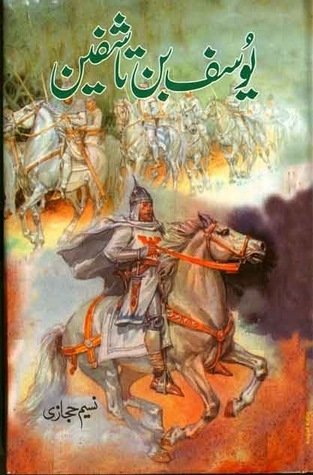
Yousuf Bin Tashfin
₨1,250₨1,400
Yousuf Bin Tashfin by Naseem Hijazi is a historical novel that portrays the life and leadership of the famous Berber king, Yousuf Bin Tashfin. It explores his rise to power, military conquests, and role in the spread of Islam
| Format | Paperback |
|---|---|
| Author | Naseem Hijazi |
Customer Reviews
There are no reviews yet.
Only logged in customers who have purchased this product may leave a review.
Related products

111 Muslim Science Daan
₨1,090This Urdu book highlights the contributions of 111 Muslim scientists throughout history. It celebrates their groundbreaking achievements in fields like astronomy, medicine, and mathematics, emphasizing their pivotal role in shaping the scientific advancements of the modern world.
-
The Revenge of Geography: What the Map Tells Us About Coming Conflicts and the Battle Against Fate
₨3,400In “The Revenge of Geography,” Robert D. Kaplan argues that geography shapes nations’ futures and their political strategies. He examines the geographical conditions of several regions, including the Middle East, China, Russia, and the United States, and how these factors have historically influenced geopolitical decisions. Kaplan contends that no matter how much technology or ideology might change, geography will always be a defining factor in global affairs, affecting security, economic power, and conflict.
₨3,845 -
A Hard Country
₨999Pakistan: A Hard Country by Anatol Lieven offers an in-depth analysis of Pakistan’s political, social, and cultural landscape. Through extensive research and firsthand experience, Lieven explores the challenges and complexities that shape Pakistan’s identity and governance.
₨1,100 -
Guns,Germs and Steel
₨999Guns, Germs, and Steel by Jared Diamond investigates the environmental and geographic factors that influenced the development of civilizations. Diamond argues that geography played a crucial role in determining which societies prospered and others were doomed to fail.
₨1,300 -
The Anarchy The East India Company Corporate Violence and the Pillage of an Empire
₨2,199William Dalrymple recounts the rise and fall of the East India Company, a corporation that conquered and exploited India. The Anarchy reveals how unchecked corporate greed and colonial violence reshaped global history, offering a cautionary tale of power and capitalism
₨2,495 -
THE LESSONS OF HISTORY
₨2,030The Lessons of History distills centuries of historical insights into timeless lessons about human nature, politics, and culture. Will and Ariel Durant provide a sweeping analysis of patterns in history, offering thought-provoking perspectives on civilization’s achievements and recurring challenges.
₨2,295 -
Freedom at Midnight
₨1,199Freedom at Midnight recounts the dramatic and turbulent events leading to the partition of India in 1947. The authors take a close look at the final year of British rule in India, providing insights into the roles of figures like Lord Mountbatten, Mahatma Gandhi, Jawaharlal Nehru, and Muhammad Ali Jinnah. The book covers the intense political negotiations, personal conflicts, and the immense human cost of the partition, which led to the creation of India and Pakistan. The authors use a rich narrative style to present the historical events, making the book a compelling read for anyone interested in the history of Indian independence and the complexities of decolonization.
₨2,345 -
The Last Mughal: the Fall Of Delhi 1857
₨3,000On a dark evening in November 1862, a cheap coffin is buried in eerie silence. There are no lamentations or panegyrics, for the British Commissioner in charge has insisted, ‘No vesting will remain to distinguish where the last of the Great Mughals rests.’ This Mughal is Bahadur Shah Zafar II, one of the most tolerant and likeable of his remarkable dynasty who found himself leader of a violent and doomed uprising. The Siege of Delhi was the Raj’s Stalingrad, the end of both Mughal power and a remarkable culture.
₨3,395