In Alexander The Great by Philip Freeman, readers are transported into the world of one of the most remarkable leaders in history. From his early life as the son of King Philip II of Macedon to his legendary military campaigns that stretched from Greece to India, Freeman provides a vivid narrative that showcases Alexander’s complex personality and strategic brilliance. Through a blend of historical facts, anecdotal stories, and Freeman’s engaging writing, this biography examines Alexander’s leadership, battles, and vision. His influence on world history and the spread of Greek culture is masterfully presented, making this book essential reading for history lovers.
save
₨300
Alexander The Great
₨999₨1,299
Philip Freeman’s Alexander The Great presents the life of one of history’s most legendary military leaders. From his ambitious rise to power to his conquests that reshaped the ancient world, Freeman’s account is an engaging blend of history and narrative.
Customer Reviews
There are no reviews yet.
Only logged in customers who have purchased this product may leave a review.
Related products

The End of India
₨899The End of India is a provocative and thought-provoking work by Khushwant Singh. In this book, Singh offers a candid and critical analysis of India’s socio-political landscape, focusing on issues such as communalism, corruption, religious extremism, and the fragmentation of the national identity. Singh reflects on the growing divisions within Indian society, both between communities and within the political system, and speculates on the consequences of these issues for the future of the nation. His writing is sharp, candid, and often controversial, offering a unique perspective on the challenges facing contemporary India.
₨1,190-
The Revenge of Geography: What the Map Tells Us About Coming Conflicts and the Battle Against Fate
₨3,400In “The Revenge of Geography,” Robert D. Kaplan argues that geography shapes nations’ futures and their political strategies. He examines the geographical conditions of several regions, including the Middle East, China, Russia, and the United States, and how these factors have historically influenced geopolitical decisions. Kaplan contends that no matter how much technology or ideology might change, geography will always be a defining factor in global affairs, affecting security, economic power, and conflict.
₨3,845 -
Seasons of Silence
₨799Seasons of Silence by Mamun Adil is a poignant novel that explores themes of love, loss, and the passage of time. It follows the journey of a man struggling with his emotions, personal battles, and the silence of unspoken words.
₨1,000 -
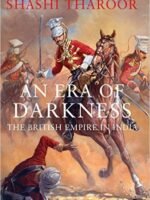
An Era of Darkness The British Empire in India
₨720Shashi Tharoor’s An Era of Darkness critiques British colonial rule in India. With compelling arguments and historical evidence, Tharoor highlights the exploitation, oppression, and economic devastation caused by imperial policies, offering a powerful reassessment of colonialism’s legacy.
₨1,050 -
The Men Who Ruled India
₨890The Men Who Ruled India is a compelling collection of biographical sketches of the British men who held the reins of power in India during the colonial period. Philip Mason examines the lives and legacies of figures such as Lord Curzon, Lord Lytton, and others who shaped the policies and events of British India. The book explores how these men navigated the complex political and social landscapes of the Indian subcontinent, often balancing imperial interests with local realities. Mason’s engaging narrative offers an insightful view of the personalities and decisions that defined British rule in India.
₨1,199 -
The Last Mughal: the Fall Of Delhi 1857
₨3,000On a dark evening in November 1862, a cheap coffin is buried in eerie silence. There are no lamentations or panegyrics, for the British Commissioner in charge has insisted, ‘No vesting will remain to distinguish where the last of the Great Mughals rests.’ This Mughal is Bahadur Shah Zafar II, one of the most tolerant and likeable of his remarkable dynasty who found himself leader of a violent and doomed uprising. The Siege of Delhi was the Raj’s Stalingrad, the end of both Mughal power and a remarkable culture.
₨3,395 -
Guns,Germs and Steel
₨999Guns, Germs, and Steel by Jared Diamond investigates the environmental and geographic factors that influenced the development of civilizations. Diamond argues that geography played a crucial role in determining which societies prospered and others were doomed to fail.
₨1,300 -
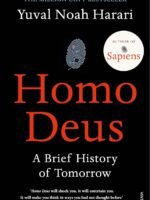
Homo Deus: A Brief History of Tomorrow
₨799Homo Deus: A Brief History of Tomorrow explores the potential future of humanity as we move beyond the struggles for survival and enter an era where humans seek to achieve god-like powers. Harari examines the rise of artificial intelligence, genetic engineering, and the pursuit of immortality. He considers how these advancements could reshape human society, ethics, and individual identity. The book poses challenging questions about the meaning of life, the evolution of consciousness, and the role of humans in a future dominated by machines.