
Barack Obama’s Change We Can Believe In is a roadmap for addressing America’s most pressing challenges. Drawing from his presidential campaign themes, Obama tackles key issues such as healthcare reform, economic recovery, education, and climate change. With a focus on bipartisan solutions and community-driven progress, he outlines practical, actionable plans for building a better future. The book also highlights stories of resilience and hope, reflecting Obama’s belief in the power of collective action and grassroots movements. Inspirational and thought-provoking, this work offers both a reflection on challenges and a call to action for those who aspire to create meaningful change.
save
₨280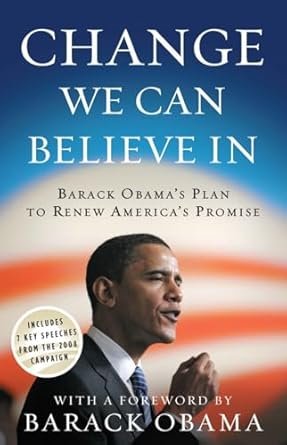
Change We Can Believe In
₨1,365₨1,645
Change We Can Believe In by Barack Obama outlines his vision for America’s future. Covering topics like healthcare, education, and climate change, Obama offers practical solutions and a hopeful message for progress, inspiring readers to believe in collective action and change.
Customer Reviews
There are no reviews yet.
Only logged in customers who have purchased this product may leave a review.
Related products

The Revenge of Geography
₨499The Revenge of Geography by Robert D. Kaplan examines how geography shapes global politics. Kaplan argues that nations’ geographical features and locations heavily influence their political decisions, strategies, and conflicts, offering a unique lens on world history and power dynamics.
₨699-
How democracies die
₨1,320How Democracies Die by Steven Levitsky explores the gradual decline of democracies around the world, focusing on the ways authoritarian leaders exploit democratic institutions. Levitsky analyzes the signs of democratic erosion and offers insights into preserving democratic values and systems.
₨1,475 -
Erdogan’s Empire
₨499Cagaptay’s book provides an in-depth analysis of President Recep Tayyip Erdogan’s rise to power, his consolidation of authority, and the impact on Turkey’s domestic and foreign policies. It examines how Erdogan’s leadership has reshaped the country’s identity and global positioning.
₨899 -
The Great Delusion
₨699Mearsheimer’s work critiques American foreign policy and its pursuit of liberal hegemony, arguing that it has destabilized global order and led to conflicts. He explores alternative approaches that prioritize realism, power balance, and the limits of U.S. influence.
₨1,099 -
How to Lose a Country The SEVEN Steps from Democracy to Dictatorship
₨1,495Ece Temelkuran examines how democracies slide into authoritarianism in How to Lose a Country. Drawing on global examples, she outlines seven warning signs of political decay, urging readers to resist apathy and protect democratic values through vigilance and action.
₨1,795 -
My Feudal Lord
₨1,499My Feudal Lord by Tehmina Durrani is a gripping memoir exposing the abuse and oppression endured by the author in her marriage to a powerful Pakistani politician. It highlights the struggles of women in patriarchal and feudal societies.
₨1,699 -
Reconciliation: Islam, Democracy, and the West
₨2,900Benazir Bhutto’s Reconciliation is a compelling analysis of the relationship between Islam, democracy, and Western values. Combining historical insights and political perspectives, she advocates for bridging divides and fostering mutual understanding to achieve global peace and stability.
₨3,445 -
Why Nations Fail: The Origins Of Power, Prosperity, And Poverty
₨2,250Brilliant and engagingly written, Why Nations Fail answers the question that has stumped the experts for centuries: Why are some nations rich and others poor, divided by wealth and poverty, health and sickness, food and famine?
Is it culture, the weather, geography? Perhaps ignorance of what the right policies are?
Simply, no. None of these factors is either definitive or destiny. Otherwise, how to explain why Botswana has become one of the fastest growing countries in the world, while other African nations, such as Zimbabwe, the Congo, and Sierra Leone, are mired in poverty and violence?
₨2,545


